
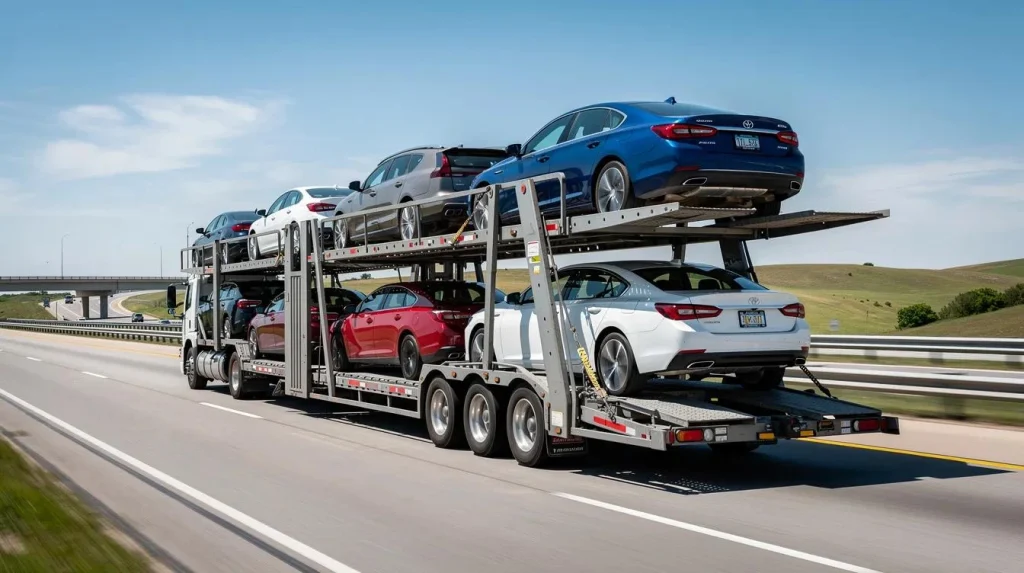
When arranging vehicle shipping, one of the first decisions is whether to choose open or enclosed car transport. Both methods move vehicles between locations, but they differ in the level of exposure, typical cost, and the types of vehicles they may suit best.
For customers shipping a car from Los Angeles or arranging transportation to another state, understanding these differences can help identify the most appropriate option.
What Is Open Car Transport?
Open car transport uses a carrier with an exposed vehicle deck. You have probably seen these trucks carrying several cars along highways or delivering vehicles to dealerships.
Because open carriers are widely used for vehicle transportation, this method is a popular option for standard passenger cars, family vehicles, sedans, SUVs, and many other everyday automobiles.
Benefits of Open Car Transport
Cost-conscious shipping: Open transport is often less expensive than enclosed transportation because open carriers can carry multiple vehicles efficiently.
Broad availability: Open carriers commonly serve many routes, although actual availability depends on the pickup and delivery locations and the requested dates.
Suitable for everyday vehicles: For many regularly driven vehicles, open transport provides a practical balance of cost and convenience.
Considerations
Vehicles transported on open carriers are exposed to normal outdoor conditions, including rain, dust, road debris, and sunlight. This does not mean damage will occur, but the exposure is a factor to consider when choosing a shipping method.
If you are shipping a recently restored classic car, a rare collectible, or a high-value vehicle, you may prefer a transport option that provides additional enclosure.
What Is Enclosed Car Transport?
Enclosed car transport places the vehicle inside a covered trailer during transit. Depending on the carrier and service arrangement, enclosed trailers may offer additional protection from weather and road debris.
This option is commonly considered for classic automobiles, exotic sports cars, luxury vehicles, collector cars, and vehicles with special transportation requirements.
Benefits of Enclosed Car Transport
Additional environmental protection: The trailer enclosure helps shield the vehicle from direct exposure to rain, dust, and road debris.
A suitable option for specialty vehicles: Owners of rare, restored, or collectible cars may prefer the added protection offered by an enclosed carrier.
More specialized handling options: Some enclosed services may accommodate particular loading requirements, subject to carrier equipment and availability.
Considerations
Enclosed transport generally costs more than open transport. Availability can also be more limited on certain routes or dates, so advance planning may be useful.
An enclosed trailer should not be treated as a guarantee against every form of damage. Always review the carrier’s insurance details, limitations, and handling procedures before booking.
Open vs. Enclosed Car Transport: Key Differences
The right option depends on your priorities, vehicle value, budget, and preferred level of environmental protection.
Open transport may be a good fit if you want a cost-conscious solution for a standard daily-use vehicle. Enclosed transport may be more appropriate if minimizing exposure is a priority for a luxury, classic, or specialty car.
Neither method is automatically the best choice for every shipment. A standard vehicle can be shipped using either method, depending on your requirements and the available service.
What Affects the Cost of Car Shipping?
Several factors can influence your final price:
- Distance: Longer routes usually require more transportation resources.
- Vehicle size and weight: Large SUVs, trucks, and oversized vehicles may take up more carrier space.
- Route demand: Busy and less frequently served routes may have different pricing.
- Season and scheduling: Peak relocation periods and limited availability can affect quotes.
- Transport type: Enclosed transport generally costs more than open transport.
- Pickup accessibility: Restricted roads or locations may require alternative arrangements.
Request a quote using accurate vehicle and route information, and ask whether the amount is fixed or subject to change.
How to Prepare Your Vehicle
Before pickup, remove personal belongings, photograph the vehicle’s condition, and report mechanical problems or modifications. Keep the fuel level low but sufficient for loading and unloading, and disable alarms if appropriate.
Review the inspection report at pickup and again at delivery. Ask how to report any concerns and keep all relevant paperwork.